Bats are among nature's most effective nocturnal insect predators. Every night, insect-eating bats hunt mosquitoes, midges, moths and a wide range of flying insects that occur around stables, paddocks and equestrian facilities.
At EcoSolutions, we use research-driven bat house programmes to encourage insectivorous bats to establish roosts near stables and horse properties. These programmes form part of an integrated approach to reducing insect pressure while simultaneously enhancing biodiversity and conservation outcomes.
For horse owners and estate managers concerned about African Horse Sickness (AHS), biting insects and chemical dependence, bats offer a natural and sustainable ally.
Interested in the science behind bat house programmes? Read our detailed article: The Science Behind Bats and Stables.
African Horse Sickness is transmitted by biting midges and other flying insects. While no single intervention can eliminate risk, reducing insect activity around stables forms an important component of an integrated management strategy. Bats contribute in two important ways:
Bats consume large quantities of insects every night.
Depending on species, season and reproductive condition, insectivorous bats may consume between 25% and 100% of their body weight in insects each night. During lactation, some species require exceptionally high food intake to meet their energy demands.
To put this into perspective, an 8-gram insectivorous bat feeding primarily on small mosquitoes could consume more than 2,000 insects in a single night.
A healthy bat colony therefore represents a substantial natural insect control service operating every evening throughout the year.
The benefits of bats extend beyond the insects they physically consume.
Many flying insects can detect bat echolocation and alter their behaviour to avoid predation. Research has shown that moths and other insects reduce feeding activity, change flight paths and even abandon breeding or feeding opportunities when bats are present.
This means that bats influence insect populations not only through consumption, but also through the fear of predation itself.
Successful bat house programmes may help reduce reliance on insecticide applications as part of a broader integrated pest management strategy.
Reducing insecticide use offers several benefits:
Lower long-term control costs
Reduced environmental contamination
Reduced risk to non-target wildlife
Lower risk of insecticide resistance developing within insect populations
Improved environmental sustainability
Bats provide a natural ecosystem service that works every night without fuel, chemicals or ongoing operational inputs.
EcoSolutions designs, installs, services and monitors bat house projects throughout South Africa.
Shop Bat Banks OnlineEmail EcoSolutions for a Site Assessment
Installing a bat box is easy.
Installing a bat box that bats actually use is far more complex.
Over the past decade, EcoSolutions has developed and refined bat house programmes across South Africa through research partnerships, monitoring projects and long-term occupancy studies.
Our work includes a collaborative project with the University of Venda and Subtrop in which more than 100 bat houses were installed within macadamia orchards to investigate the role of bats in insect management.
Occupancy has subsequently been recorded across the project area, providing valuable information on bat house design, placement and management.
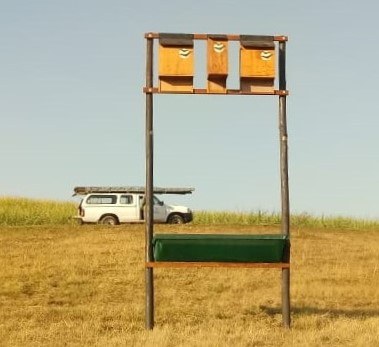
The success of a bat house depends on several factors:
Location
Orientation
Height above ground
Surrounding habitat
Proximity to water
Internal box design
Ongoing monitoring and maintenance
Small changes in any of these factors can significantly influence occupancy rates.
This is why EcoSolutions uses satellite imagery, habitat assessments and species-specific design principles when planning bat house installations.
Different bat species require different roosting conditions.
Some species prefer warm maternity roosts. Others favour cooler resting sites or temporary night roosts.
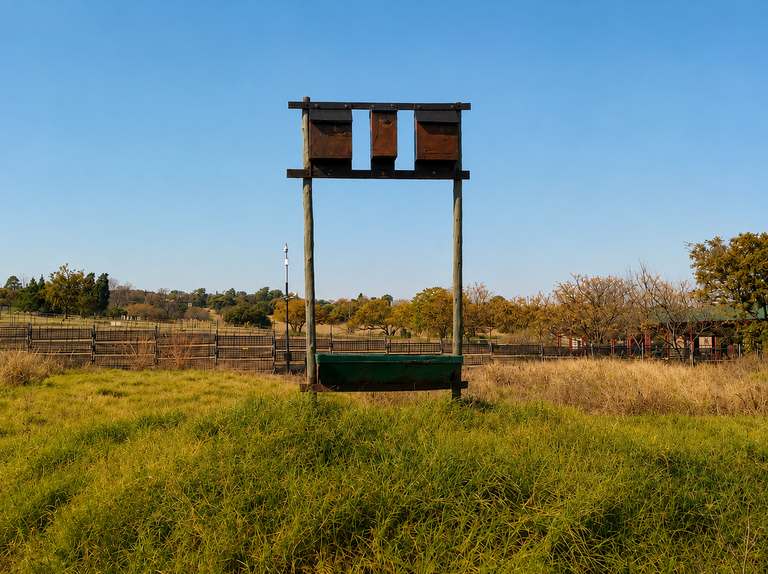
To maximise occupancy potential, EcoSolutions typically installs multiple bat house designs together within a bat bank.
Our standard systems incorporate:
Nursery Boxes
Six-Chamber Boxes
Old George Boxes
Providing multiple roost options allows bats to select the conditions that best suit their requirements throughout the year.
Where possible, we recommend installing two bat banks in separate locations on larger properties, allowing bats to move between roost sites as environmental conditions change.
Every site is different. EcoSolutions can assess your property and recommend the most suitable bat bank design and placement strategy.
Bat Banks in Our Online ShopContact Us for a Recommendation
The success of a bat house programme depends on ongoing management.
Every EcoSolutions bat bank forms part of a long-term monitoring programme that includes:
Occupancy assessments
Structural inspections
Repairs and maintenance
Temperature monitoring
Design optimisation
Habitat assessment
Our monitoring programme allows us to continuously improve performance and ensure that bat houses remain functional and attractive to bats over time.
We often say that our unoccupied bat houses are just as important as our occupied ones because they teach us how to improve future installations.
Bat houses do more than support natural insect control.
They provide valuable artificial roost sites for native bat populations facing increasing pressure from habitat loss, urbanisation and changing land use.
By installing bat banks, horse properties contribute directly to biodiversity conservation while benefiting from the ecosystem services bats provide.
EcoSolutions designs, installs, services and monitors bat house projects throughout South Africa.
Whether you manage a private stable, breeding facility, polo estate, equestrian centre or large agricultural property, we can assess your site and recommend the most suitable bat house programme.
Shop Bat Banks OnlineEmail Us to Discuss a Bat Bank Assessment for Your Property